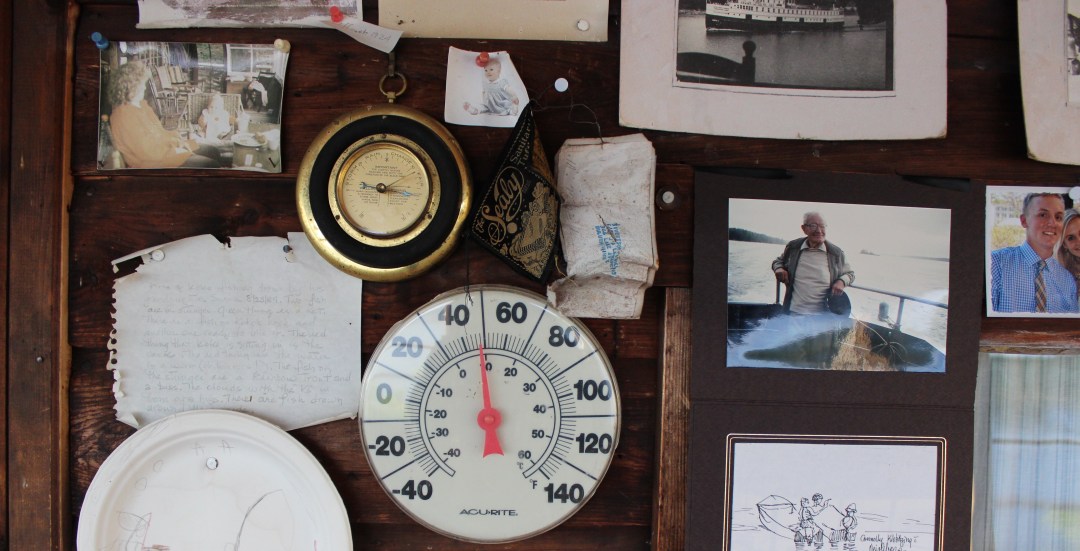
More than 125 years ago, families traveled to Isle Royale for all kinds of reasons. Some had commercial fishing operations based on the island. Some took the ferry out to vacation.
Over time, families built homes and fisheries and camps on varying parts of Isle Royale, stretching from Tobin Harbor to Washington Island. While different families had different purposes, they united over generations in their love for the island and a unique way of living that has stood the test of time.
The cultural history ingrained in the buildings that remain and the families who have occupied them for a century or more is an important piece of the tremendous, unique history of Isle Royale National Park.
Families
Anderson
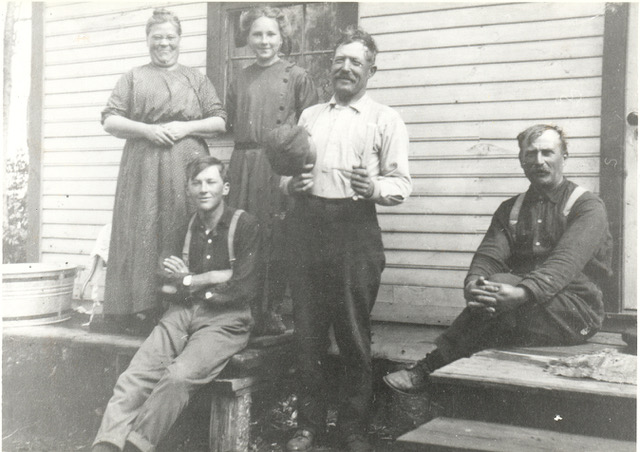
John Anderson and Herman Johnson were Scandinavian immigrant fisherman who began fishing at Pickerel Cove in the 1880’s, living in just tents. By the 1890’s they moved their fishing operation to Fish Island (now Belle Isle) and built a cabin, dock and gas storage building on Gasoline Island. They fished from there until Fred Scofield bought the island in 1912 to establish the Belle Isle Resort. Scofield told the two fishermen they could move their fishery to the island across from Belle Isle, which he also owned.
After the two moved, built two cabins, docks, a fish and boat house, Scofield learned he did not own that island but another nearby.
Not wanting to move again, Herman and John decided to homestead the island. John’s youngest son, Gil Anderson, and his fishing partner spent the winter of 1915 on the island to fulfill the 12 month occupancy requirement for a homestead patent. The patent was issued to Herman Johnson because he was the senior partner of the two and the island was named Johnson Island. The two families fished together from Johnson Island until Herman retired and sold the island to John Anderson for $1 in 1922. The Anderson family continued to commercially fish from Johnson Island until John’s son Emil and his wife Elna retired in 1958.
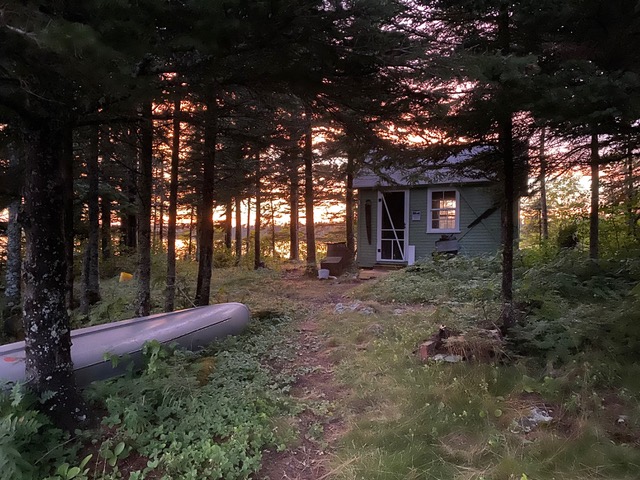

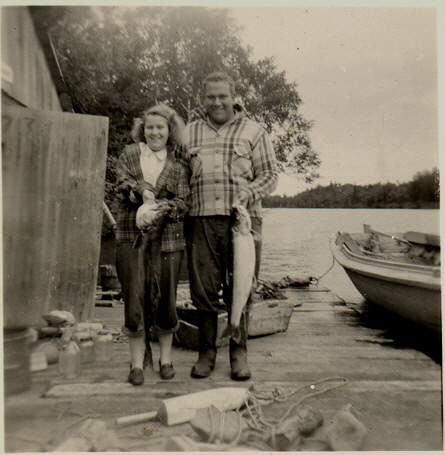
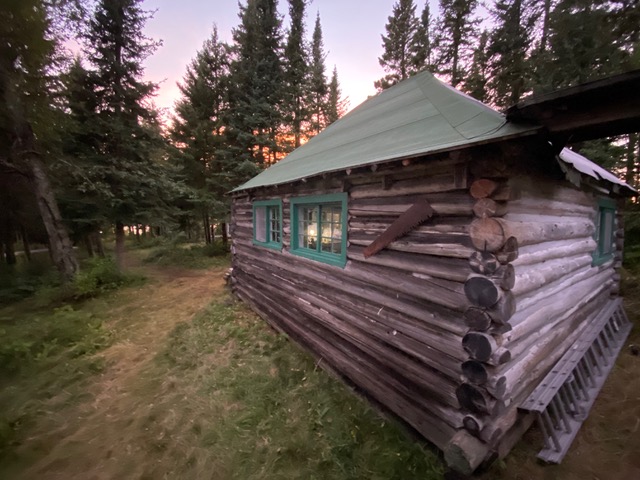
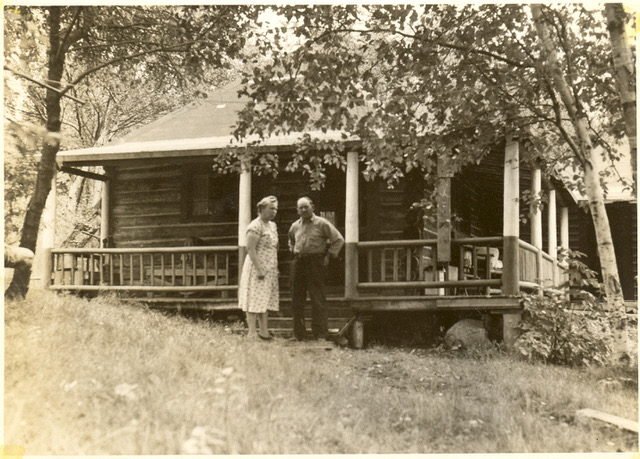
Today, John Anderson’s great grandchildren and family friends continue to visit the island each summer to maintain and care for the five historic structures built by their immigrant ancestors. The fishery provided a stable income for the family through two world wars, the Great Depression and enabled John’s grandchildren to attend and graduate from college. The island and its history are a testament to every immigrant’s dream of a better life in America for future generations.
Edwards
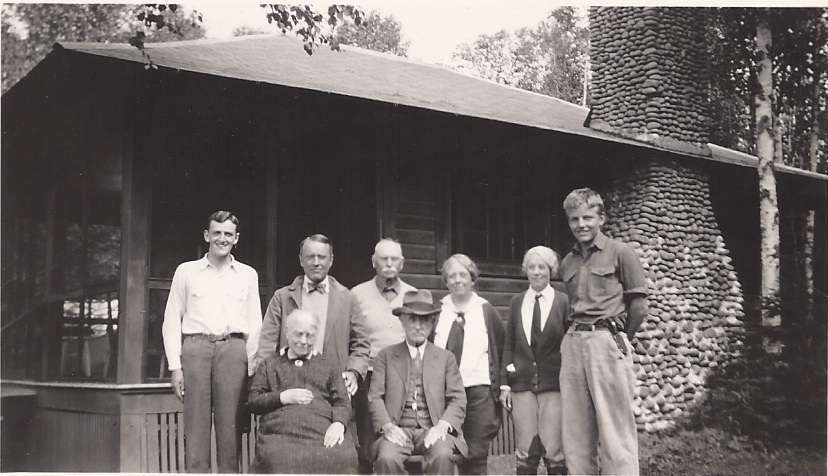
The Reverend Maurice D. Edwards of St. Paul, Minnesota, first came to Isle Royale in 1893 seeking good fishing waters and a remote, wild place for spiritual reflection. A few years later, Maurice returned with his wife Annie Louise, their children and extended family members. They set up camp in Tobin’s Harbor on “a large island just east of Scoville’s Point,” returning each summer to the same spot.
Maurice purchased the island in 1908 on the auction block and built a cabin there, naming it “Prospect Camp.” Maurice’s grandson, Robert Edwards wrote that “the facilities were designed for a cheerful, healthy level of plain living and high thinking!”
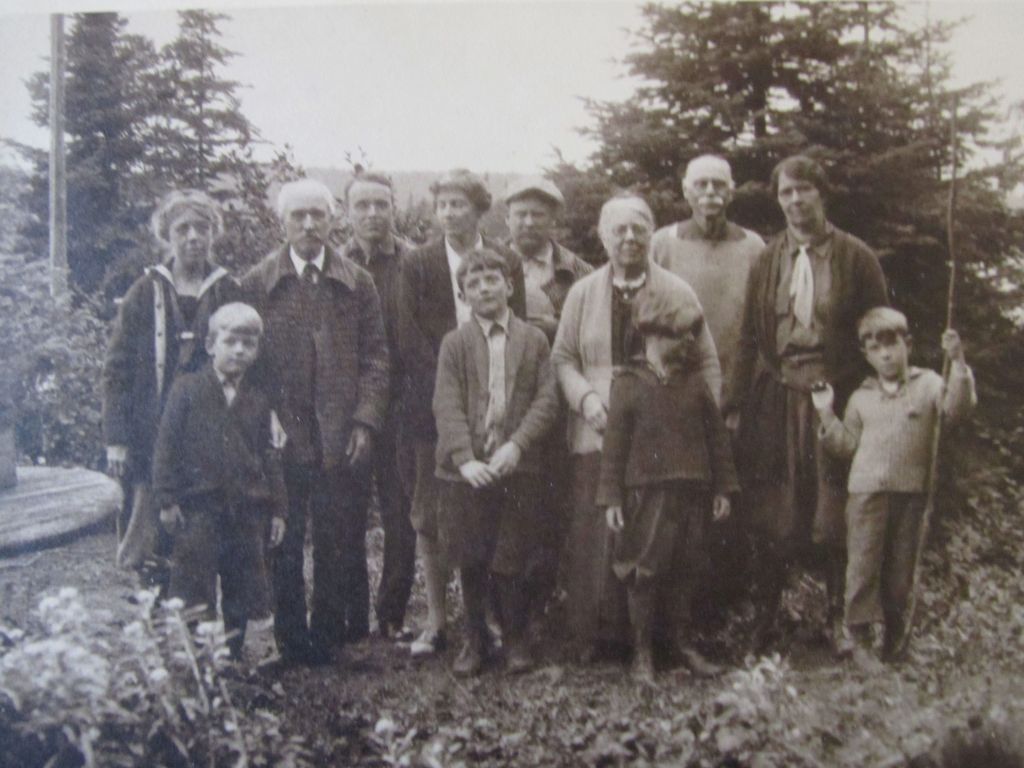
“For shelter, a one-bedroom cabin with friendly fireplace, along with a series of platform tents; for cooking, an iron wood-burning stove; for eating, a screened-in frame dining structure with a near-by supply room; for water…buckets and dippers repeatedly refilled from the Lake.”
For over a hundred twenty-five years, generations of Edwards have continued to maintain this historic place while preserving camp traditions in sync with the surrounding wilderness and respect for the waters of Lake Superior and the archipelago that comprises Isle Royale.
Gale
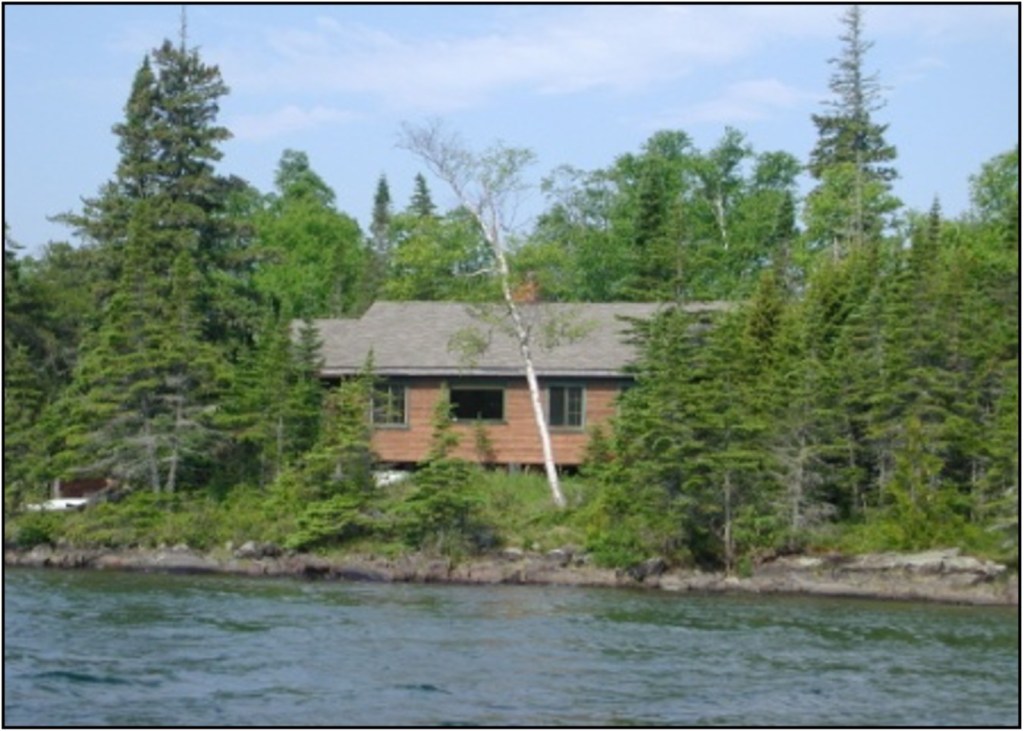
2022 marks the ninetieth year that the Gale family members have made an annual trek to Isle Royale.
How did it all start – In 1932, at the height of the Depression, Alfreda Gale was invited to visit Isle Royale by her good friend, Gertrude How. They had been in grade school together in St. Louis, Missouri, and maintained their friendship over many years. Alfreda still lived in St. Louis with her father, Alfred, and her two young sons, John and Phil. She was a single mother, so it was not an easy trip to head off to the north woods, driving on dirt roads from Green Bay to Houghton, Michigan, to take a ferry over to Isle Royale, leaving her two sons behind. But she loved the outdoors! She spent her time at Isle Royale on How Island in Tobin’s Harbor.
The next year, Alfreda brought John and Phil up to the Island and spent it with the How family. They met others who lived in the harbor at this time. Mattsons, Merritts, Edwards, Snells, Greens, Baileys, Wolbrinks, Musslemans, and others.

Alfreda was so enamored with Isle Royale that she invited her father, Alfred, to visit with her and the boys the following year and they stayed on Musselman Island. In 1935, Alfred bought Gale Island (2.1 acres) for his daughter from a Mrs Bandettini. Gale Island was historically used by the Mattsons and others to raise chickens for meals at Minong Lodge on Minong(Hotel) Island. For this reason, the island was named “Chicken Island” before the Gales bought it.
In 1935, talks began at the national level to make Isle Royale a National Park. The Gale family knew of these talks and heard that owners of lands with a cabin on it would be given the option to either sell their lands to the government or obtain a life lease. The Gale family wanted to stay on Isle Royale and therefore made plans to build a cabin on their newly acquired Island. To accomplish this they employed an architect to design their cabin. This was one of very few structures to be built to a set of plans at that time, since many of the structures of that era were built from salvaged materials, and were changed over time, depending on their needed function.
In 1936, construction began on the Gale Cabin with materials shipped over from Duluth, MN. They were dropped off at the mail dock in Tobin’s Harbor, and then slowly moved the short distance to Gale Island on another boat. The cabin was built by Art Mattson, Phil Gale, John Gale, Bill Robinson, Alfreda Gale and others. Various tasks were assigned to those who built the cabin. In particular, John Gale was the mason for the project and built the huge stone fireplace with a Heatilator and beautiful Cedar mantle. There are also some noteworthy features in the Gale Cabin. In the living room, there is a hidden writing desk on the east side of the room. The small bedroom off of the living room was used by Alfreda Gale and has a pass-through window from the bedroom to the kitchen . It was most likely created on a whimsy by the builders to say she could be “served” breakfast in bed. This was most unlikely since she did most of the cooking in this kitchen.
The Gale cabin was completed in 1937 and a life lease was officially given to John and Phil Gale in 1940. This was done so that use of the cabin would extend for the lives of John and Phil.
Johns
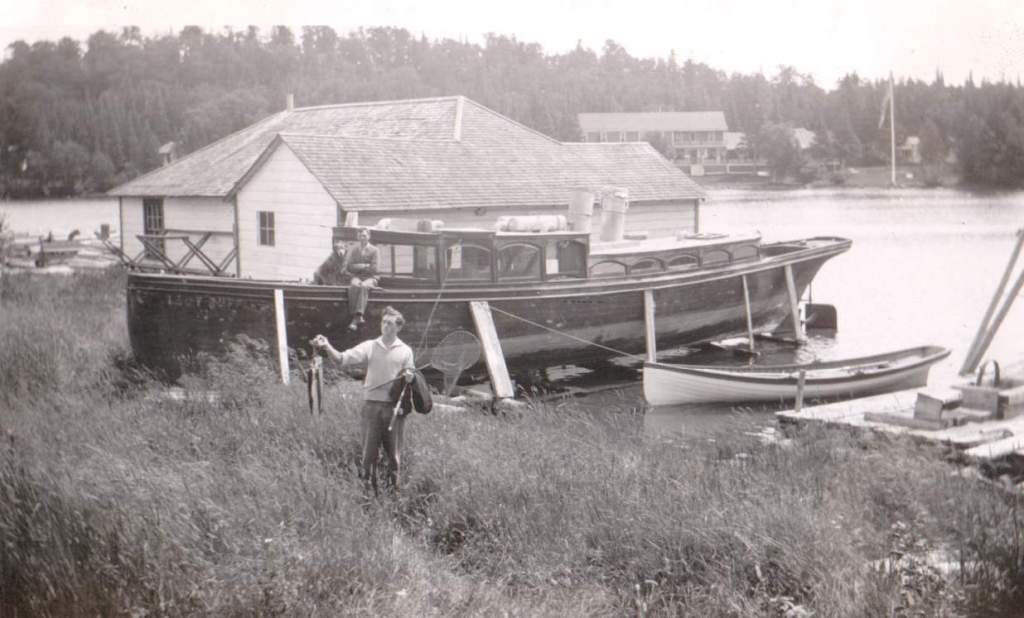
The eastern end of present day Barnum Island was once a thriving family community, explored and settled by John F. Johns and his wife Catherine in 1861. John was born in Hartland, England and raised in Redruth of Cornwall. He and Catherine immigrated to the Upper Peninsula of Michigan in 1855 where they started their family of eleven children.
John worked as a copper miner and was recruited to explore the eastern end of Isle Royale and in subsequent years, the western end of the Island. They eventually moved to Isle Royale, settling on Johns Island (later named Barnum Island). From here, John worked as a miner, fisherman, and resort owner. John and sons built the first resort accommodation, the Johns Hotel, and visitors cabins on the Johns Historical Point.
The property he owned and homesteaded consisted of the Hotel, a smaller log house, fish house, boat house and boats, docks, a dining room, small barn with chickens, cows and sheep and other small cottages. Earlier, about 1888, they built a cabin on what is now Johns Island to lodge the fishermen who worked for John.
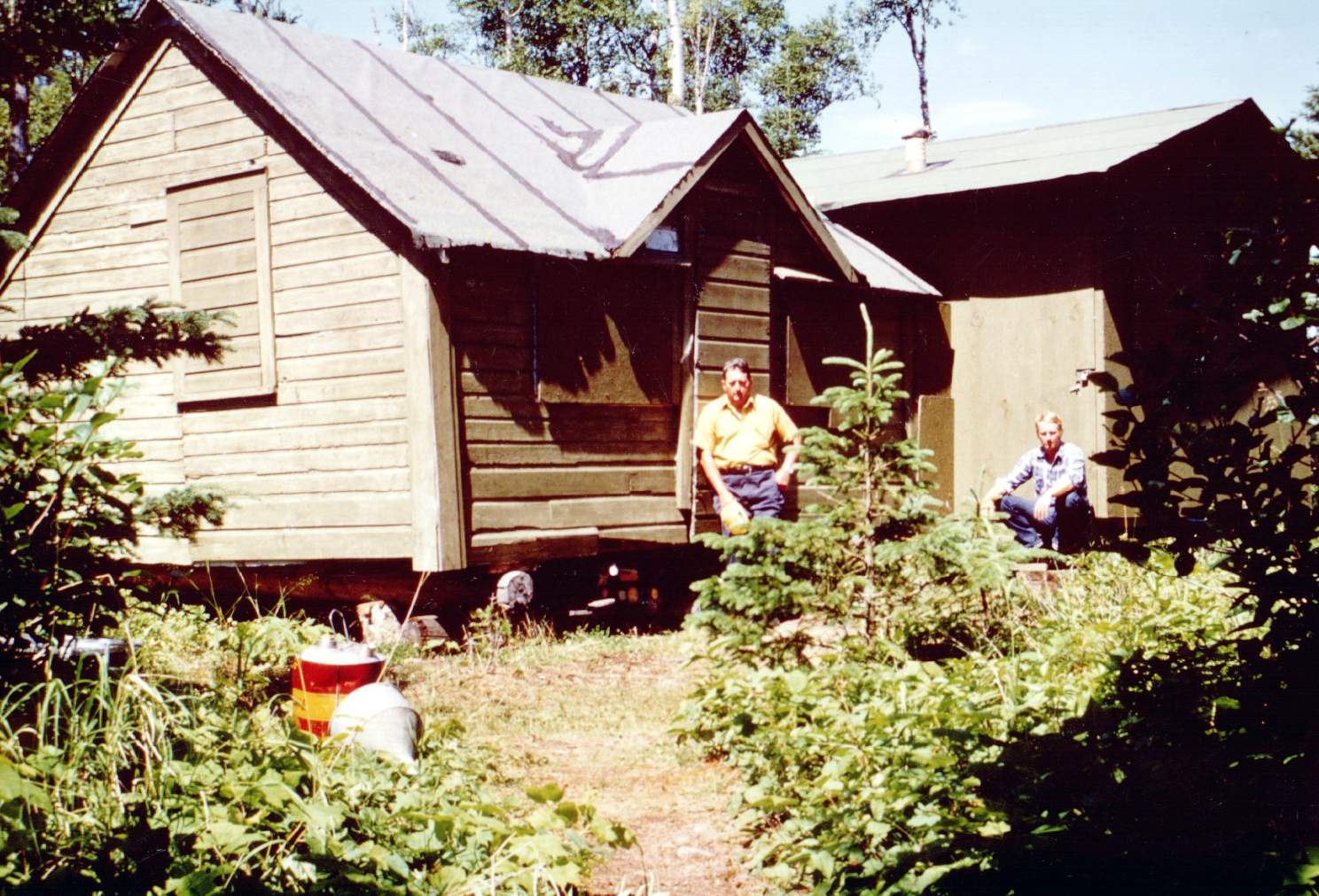
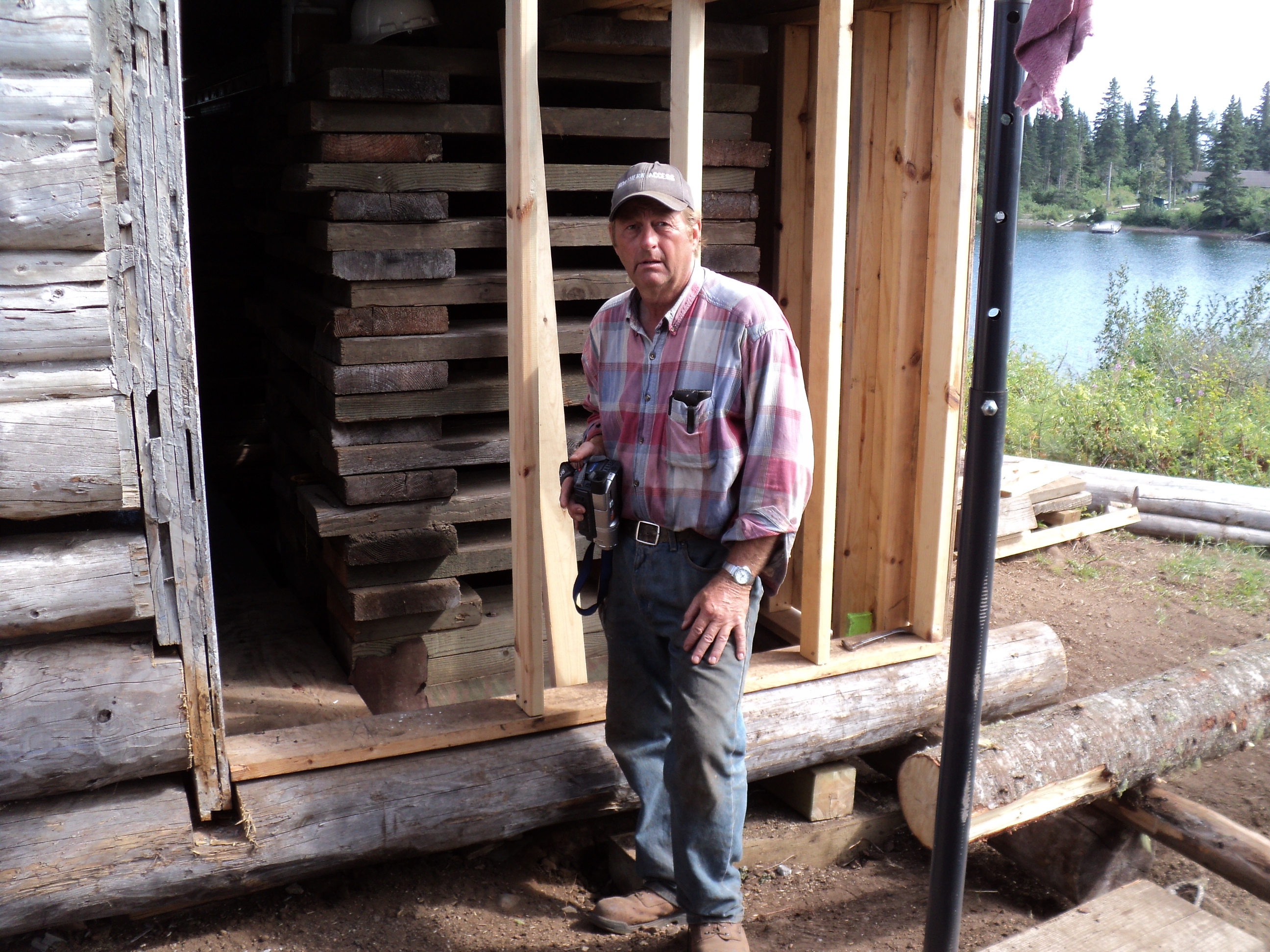
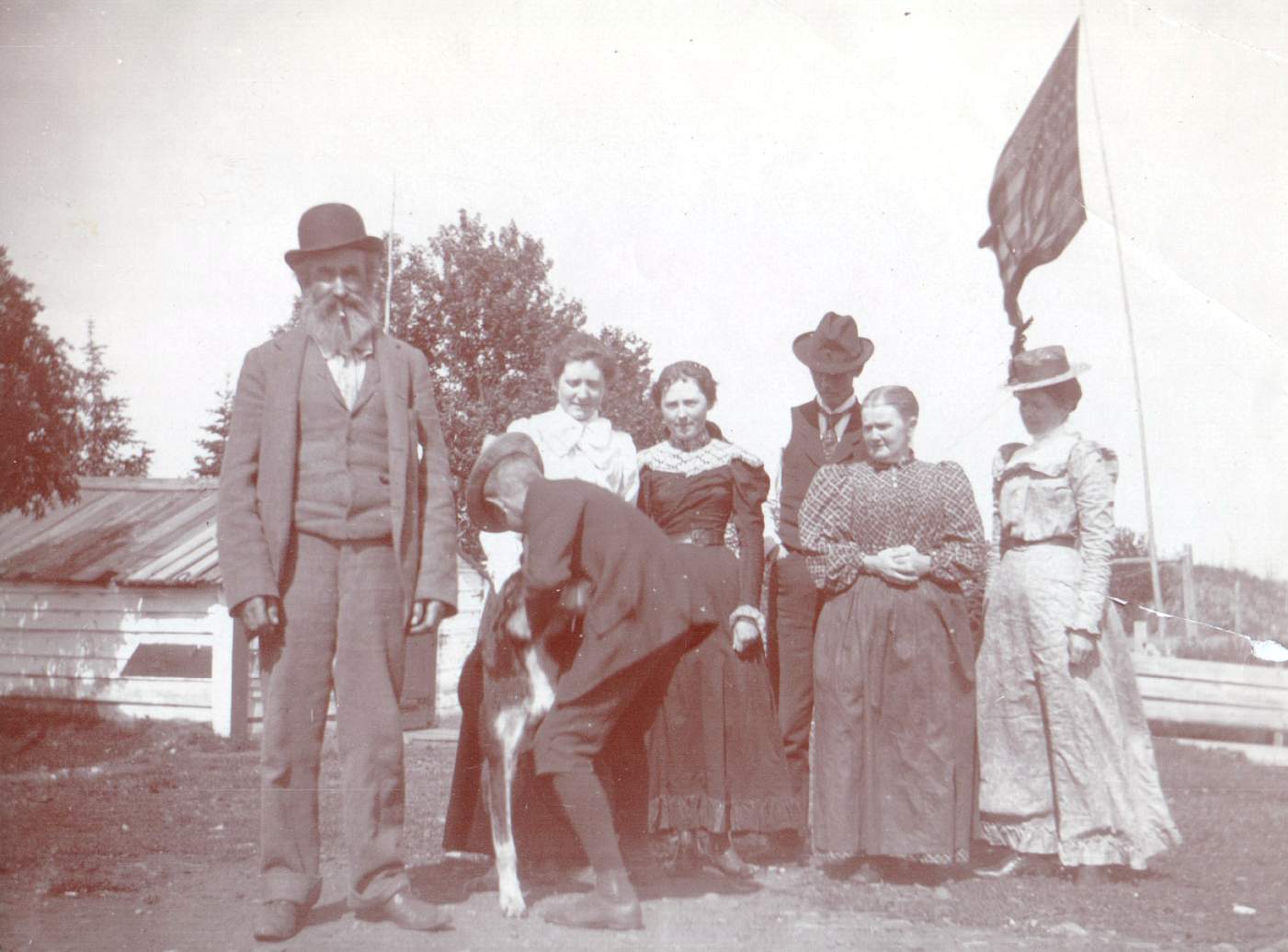
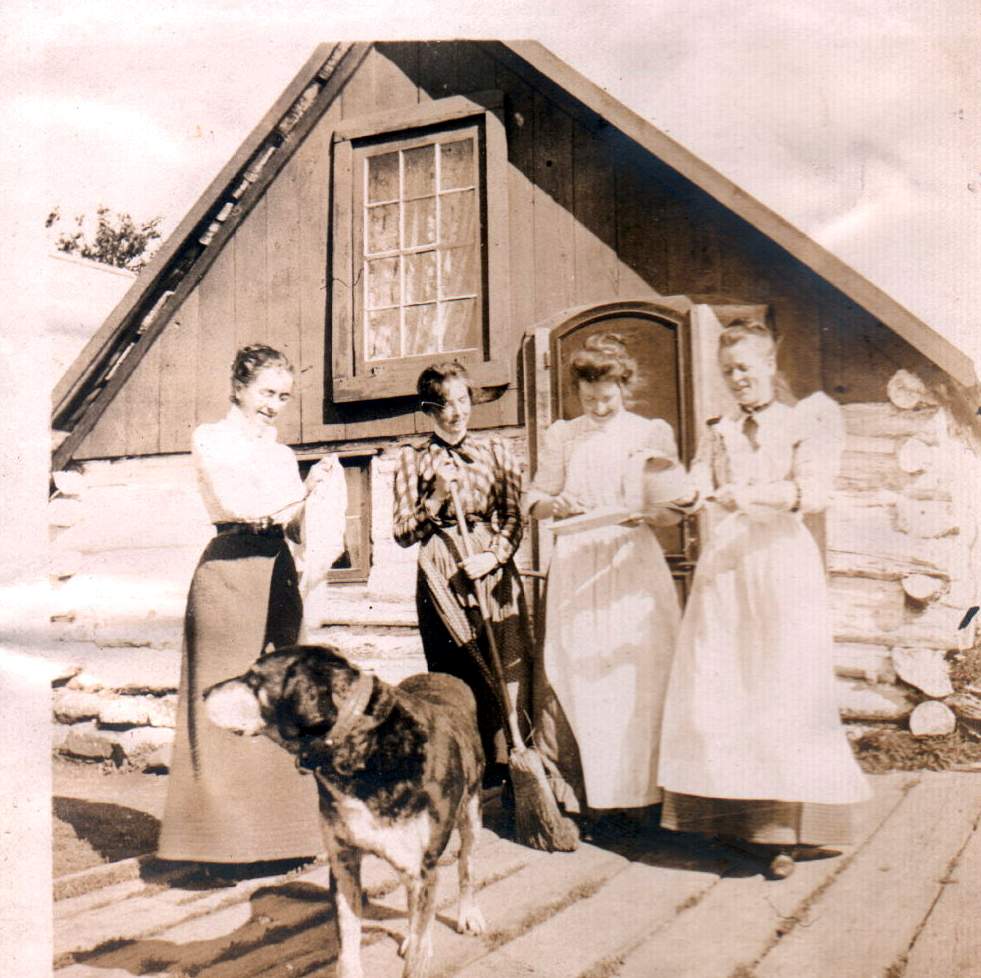
Through the years and up to the present day, the Johns Family has been able to maintain and live in the Johns Hotel as well as the cabin on Johns Island. Our grandfather, Edgar, was the youngest child of John and Catherine. Edgar and his wife, Grace, continued to live and work at the Hotel during their lifetime. Edgar’s son, Robert, his wife Betty and their five children (Robert, William, Thomas, Cynthia and Patrick) and their families also continued to occupy the Hotel and eventually the cabin on Johns Island.
Through the years and after being designated a National Park, the family continued to stay on Johns Island each and every year although the Hotel had progressive deterioration. In 1996 with much persistence, planning and determination, Robert Johns received a letter from the Superintendent permitting ongoing stabilization and restoration of the Johns Hotel. By 1997 details of the structure and construction management were formalized. The actual preservation work began. Today, Robert’s children, grandchildren and great-grandchildren are restoring the Johns Hotel according to standards of the National Register of Historic Places. Through the cooperation of the National Park and family members spending substantial amounts of time and their own money, the restoration of this significant building and homestead continues. Some of the accompanying photos show the original Johns family that lived on the Island in the mid 1800’s and others show the present day family members working on the restoration project.
Merritt
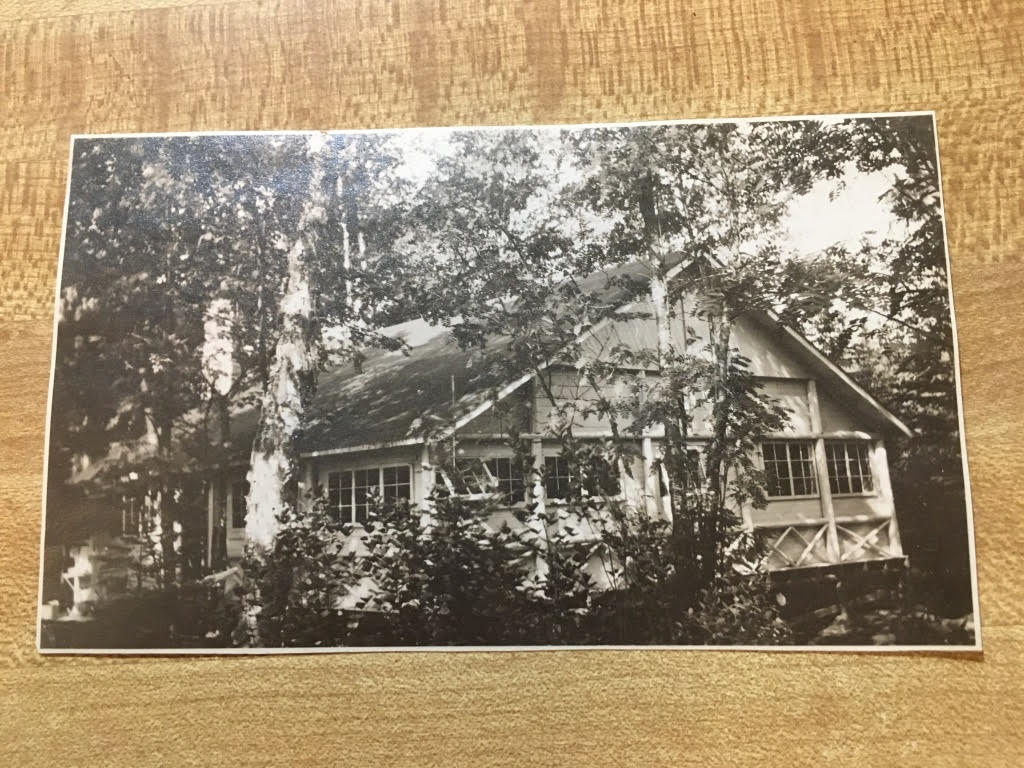
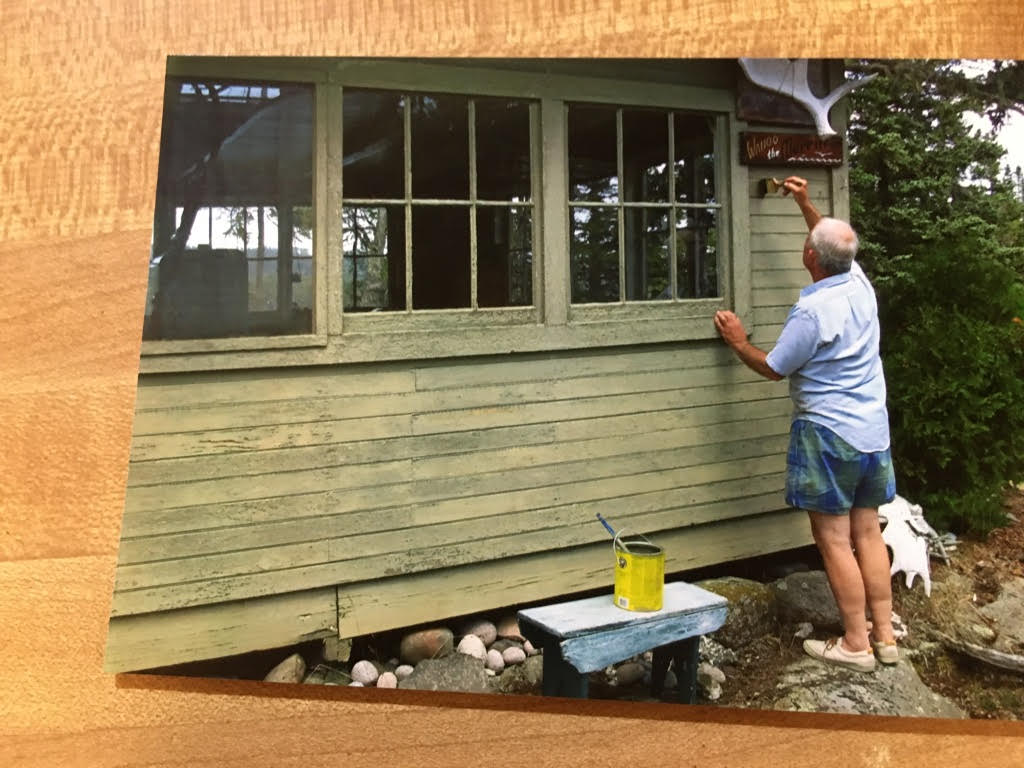
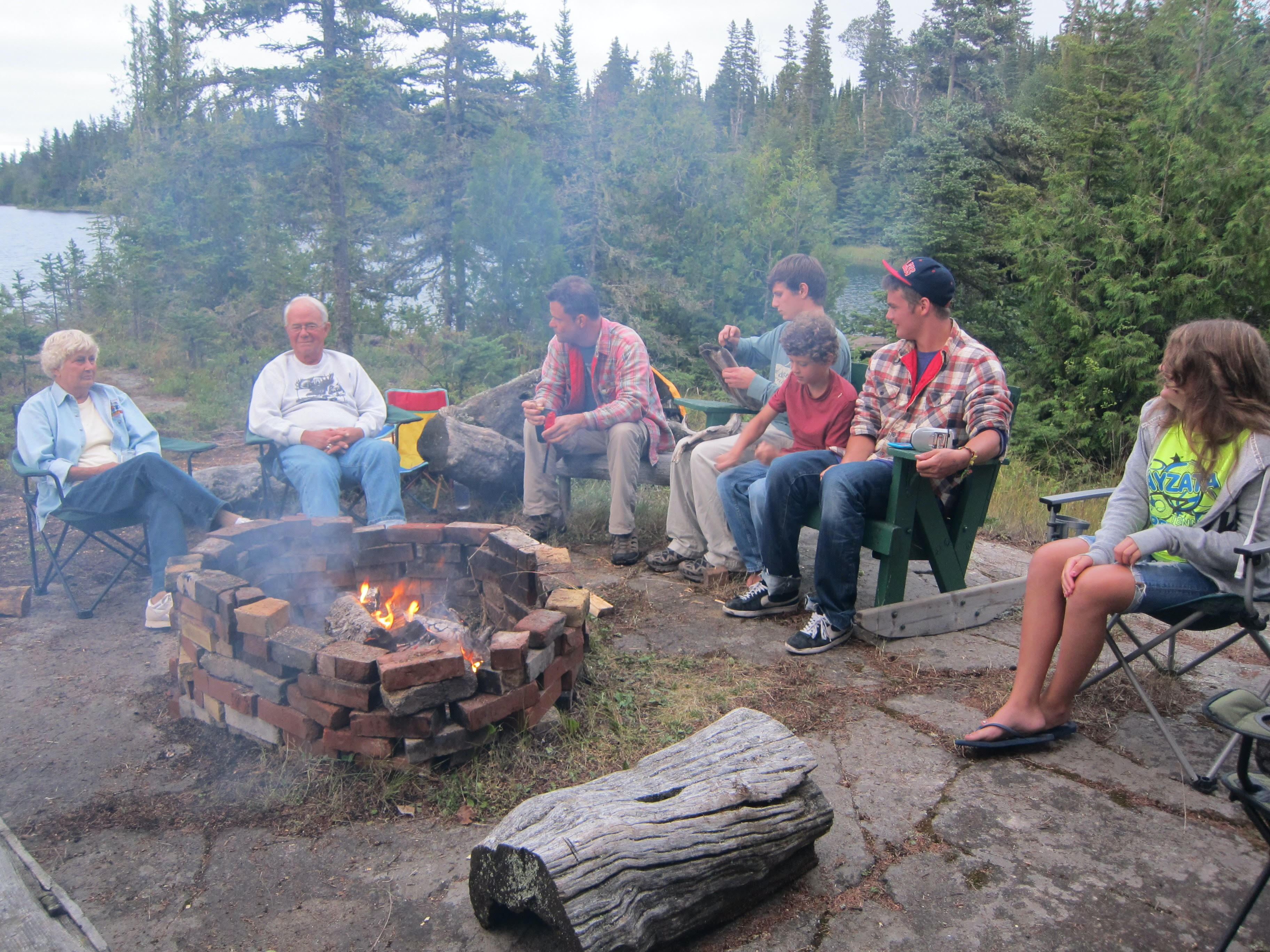
In 1866 a nineteen year-old Alfred Merritt sailed to Isle Royale as a deckhand on the schooner Pierpont. It stopped at Washington Harbor to unload 1500 hundred pound kegs for the commercial fishermen there, picking them up six weeks later filled with salted down lake trout, whitefish and herring. He returned in 1873 in charge of a crew to build the two and one half mile road up the rugged terrain to the Island Mine from Siskiwit Bay which they finished in 1874. He returned to visit and camp around the island between 1874 and the early years of the next century. In 1908 Alfred Merritt attended the auction of Isle Royale islands at Marquette, Michigan. He bought a number of islands in Tobin’s harbor, Duncan Bay and Siskiwit Bay including the four that are south of Blake”s Point at the northeast end of Isle Royale.
In 1907-09 he cruised with his family to Isle Royale from Duluth in his forty-two foot yacht. They stayed at Tourist Home, now Davidson Island in Rock Harbor near the park headquarters at Mott Island. On one of those years, they went into Washington Harbor and docked at Barnum Island. As Grandfather and son Glen were on the dock tying up they heard George Barnum, Sr. yelling at them: “Five Dollars an hour to tie up at this dock!” Glen said his father paid no attention and when Mr. Barnum got closer and recognized Alfred he said, “Oh, is that you, Alf? You can tie up here any time.”
In 1911 Alfred and family built a large cabin in Tobin’s Harbor on the first island south of Blake’s Point. This became Camp Comfort. Later he bought Wright’s Island in Siskiwit Bay and a small island farther up Tobin’s Harbor. When the park was created the family had fourteen islands. They sold all of them to the park for five dollars an acre, except the one up the harbor known as Camp Dig Inn, which they still occupy under a special use permit from the park for Grant and his sister Mary Alice. She and her husband plus her son Brian Bergson and family are there in the summer. Grant’s wife Marilyn, their three children and grandchildren have enjoyed being there virtually every summer as well.
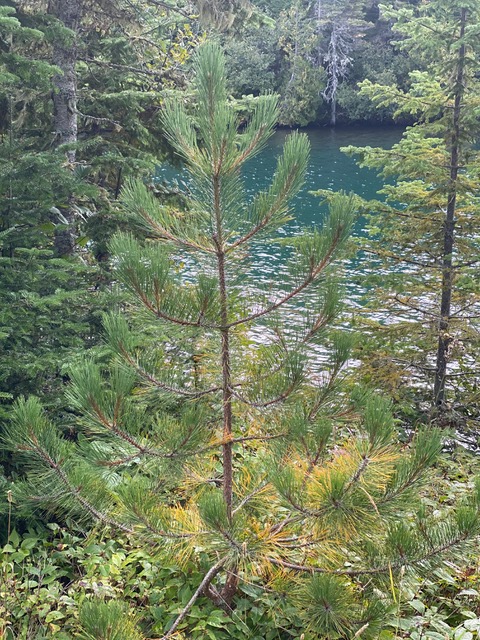
There once was a 3 inch red pine growing up the river flowing into Duncan Bay at Isle Royale. Louis Mattson and Grant moved that little red pine to grow on the path between the main cabin and the “parsonage” at Camp Dig Inn. It now is some 65 feet tall and a proud parent of this 5 foot offspring which has sprung up from a pine cone blown some distance east of the big red or norway pine.
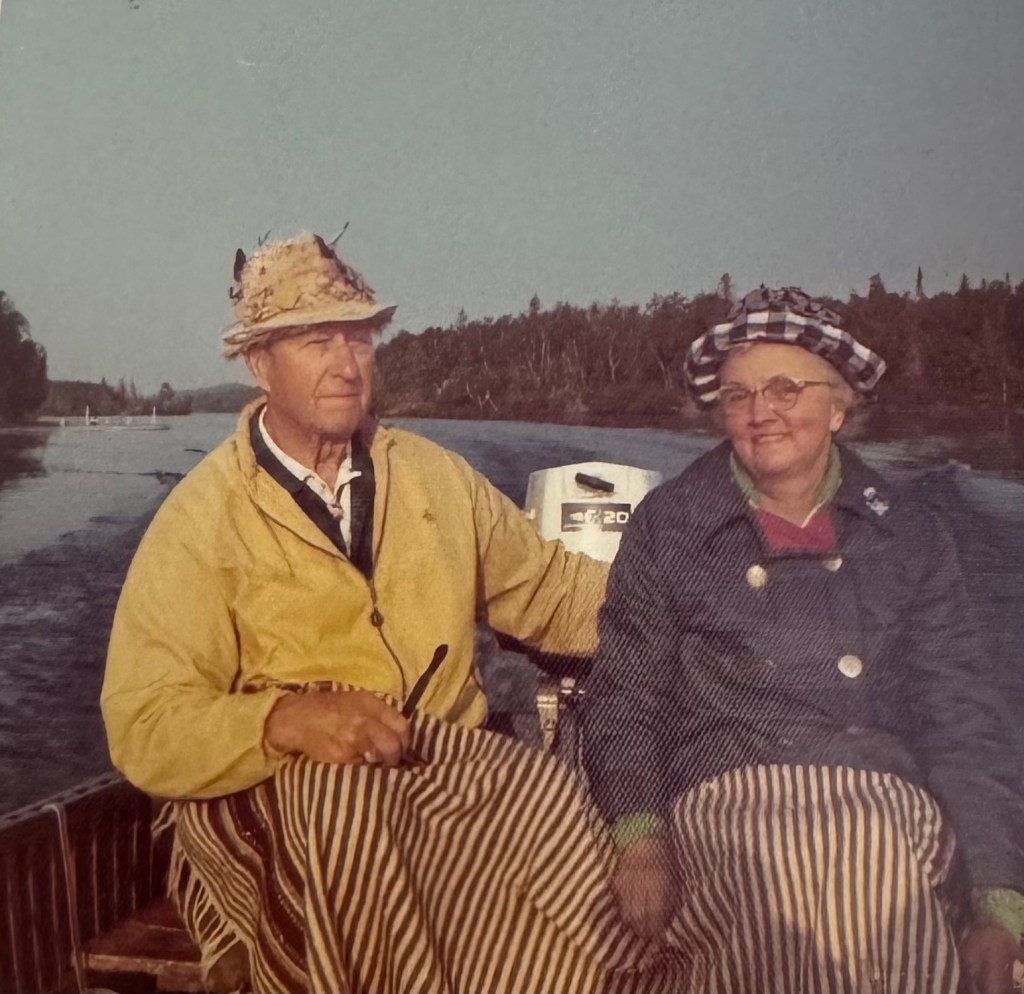
This history of the Merritts at Isle Royale cannot end without seeing Glen and Alice Merritt in the “Handy” keeping warm in their serapes, which were gifts from their good Tobin’s neighbor EK, Elizabeth Kemmer.
Snell
Island Purchase & Cabin Construction
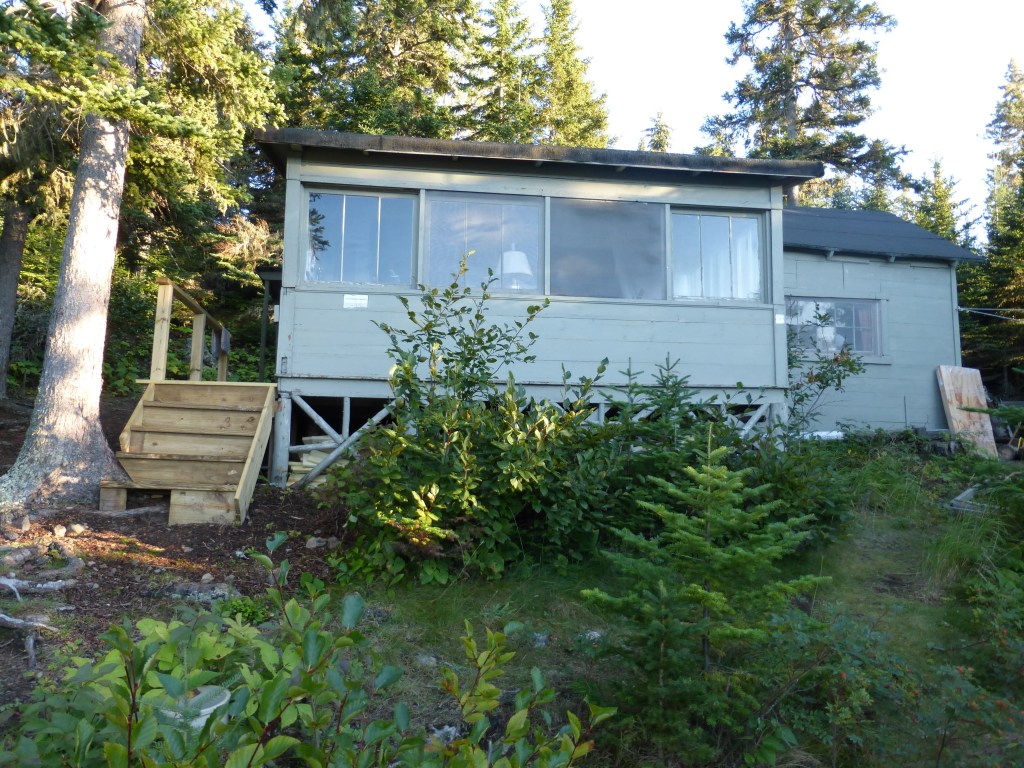
Roy, Lucille and their three boys, Jud, John and Laurie spent summers at Isle Royale starting in 1932. They need to escape the summer heat and find relief from asthma. They rented a cottage in Rock Harbor and then in Tobin Harbor. In 1936 Roy and Lucille Snell purchased their cabin from Faustina Breen of Duluth. The cabin at that time consisted of two rooms the living room with extended porch and the kitchen.
Fishermen Art and Ed Mattson built the Snell Cottage, the earliest structure on the site, in 1905. The writing shack was built in the late 30’s or early 40’s. With Three boys Jud, John and Laurie they needed more room so the boys slept in a tent on a wooden platform. A sleeping room added by appropriating a tourist cabin from the Minong lodge taken apart and floated across the water. The guesthouse was created in the same manner. The writing cabin on the right was where Roy wrote two of his 84 books that take place on Isle Royale: The Galloping Ghost and the Phantom Violin and the radio dialogue for “Jack Armstrong, all American boy” one summer.
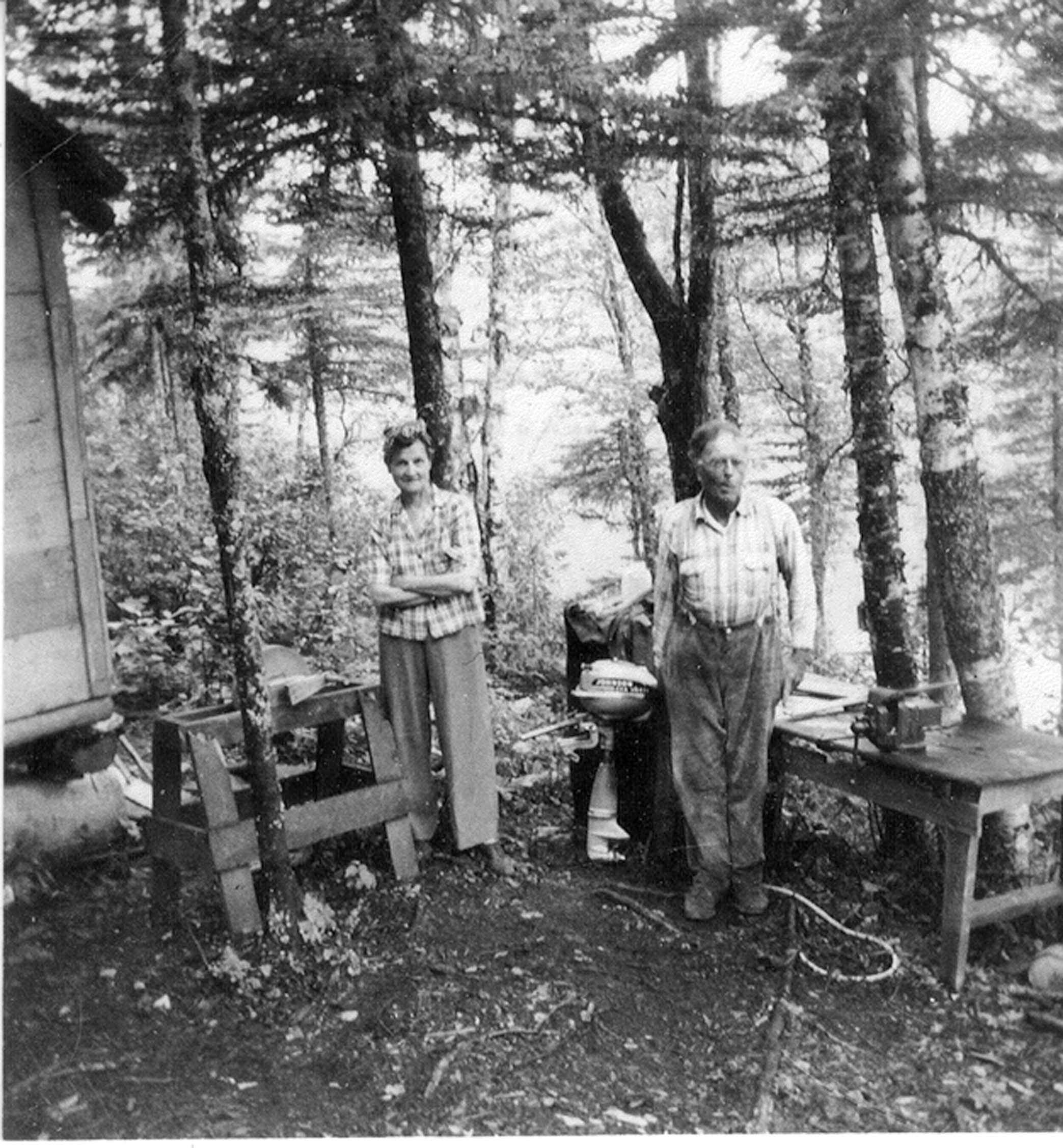
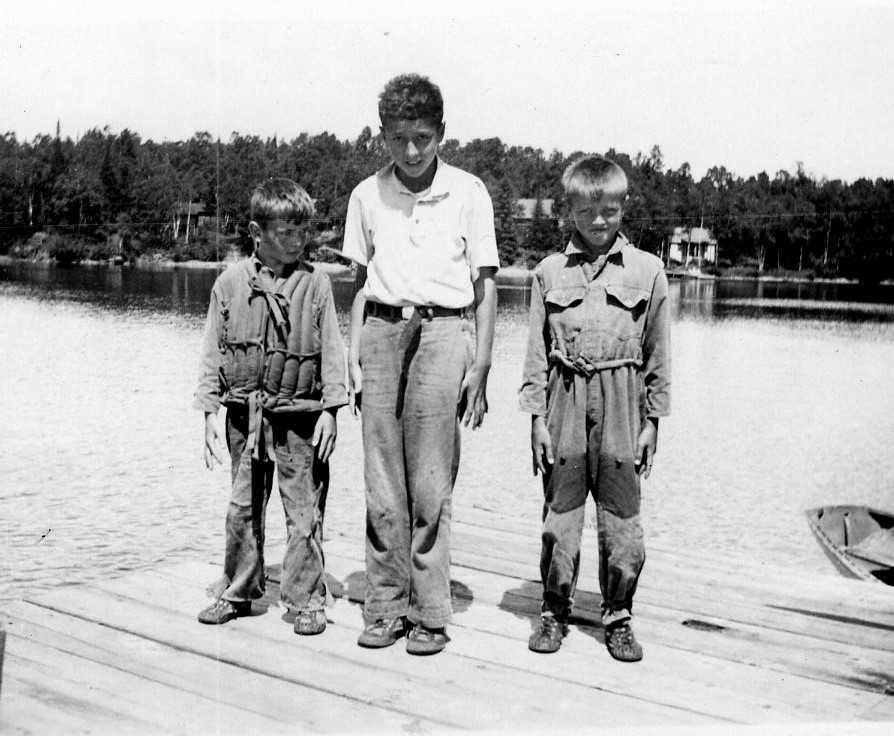
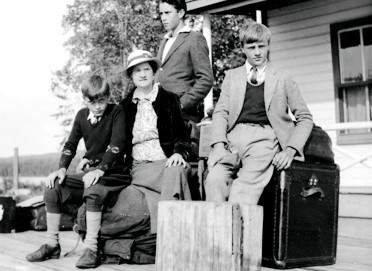
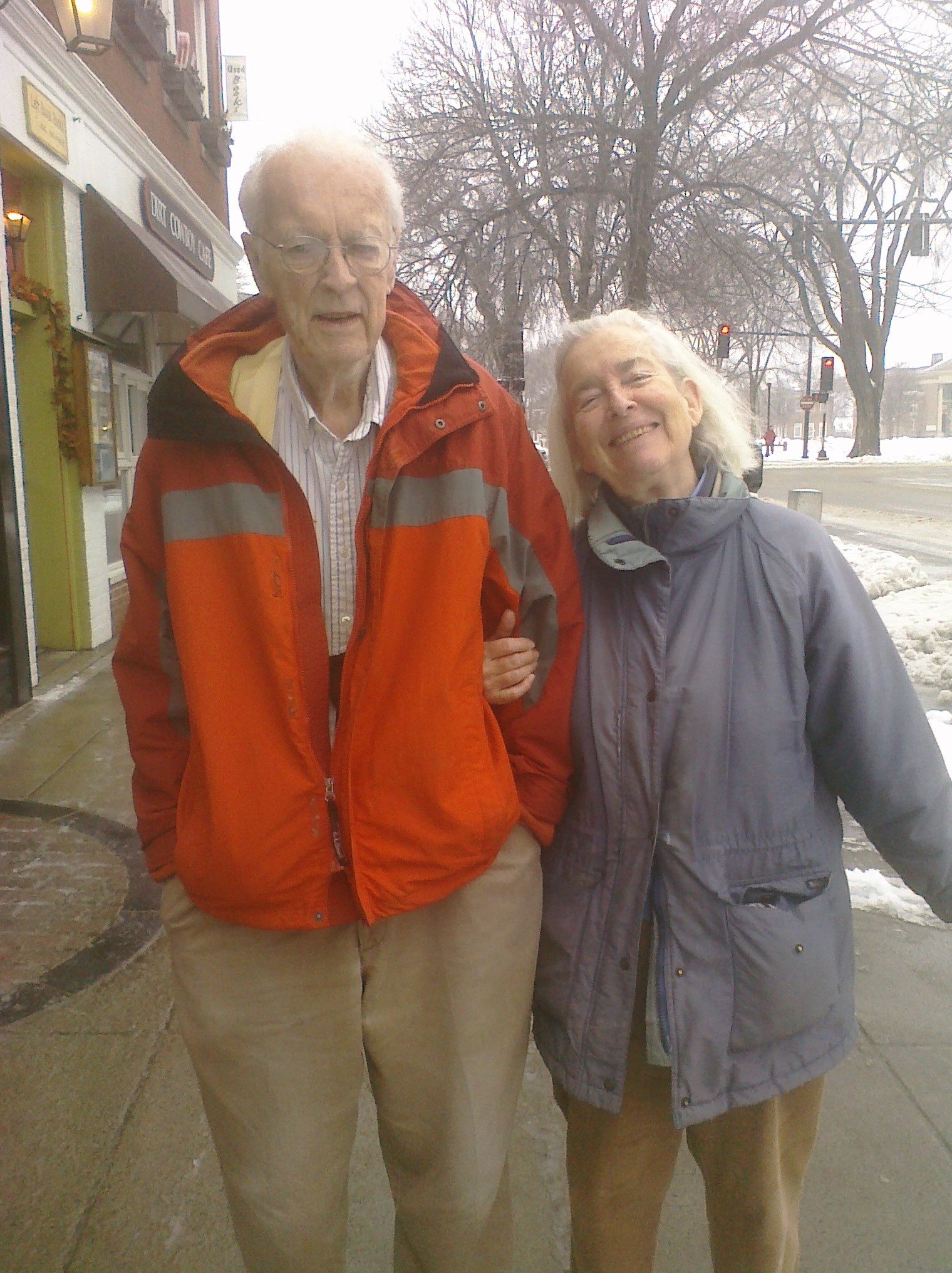
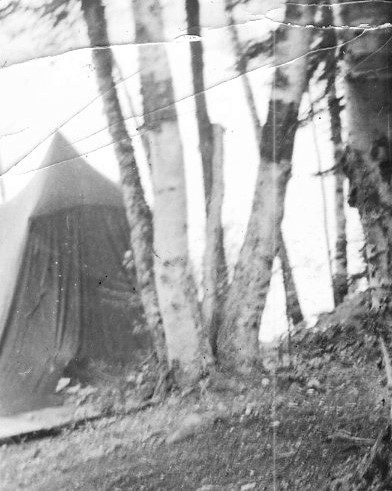
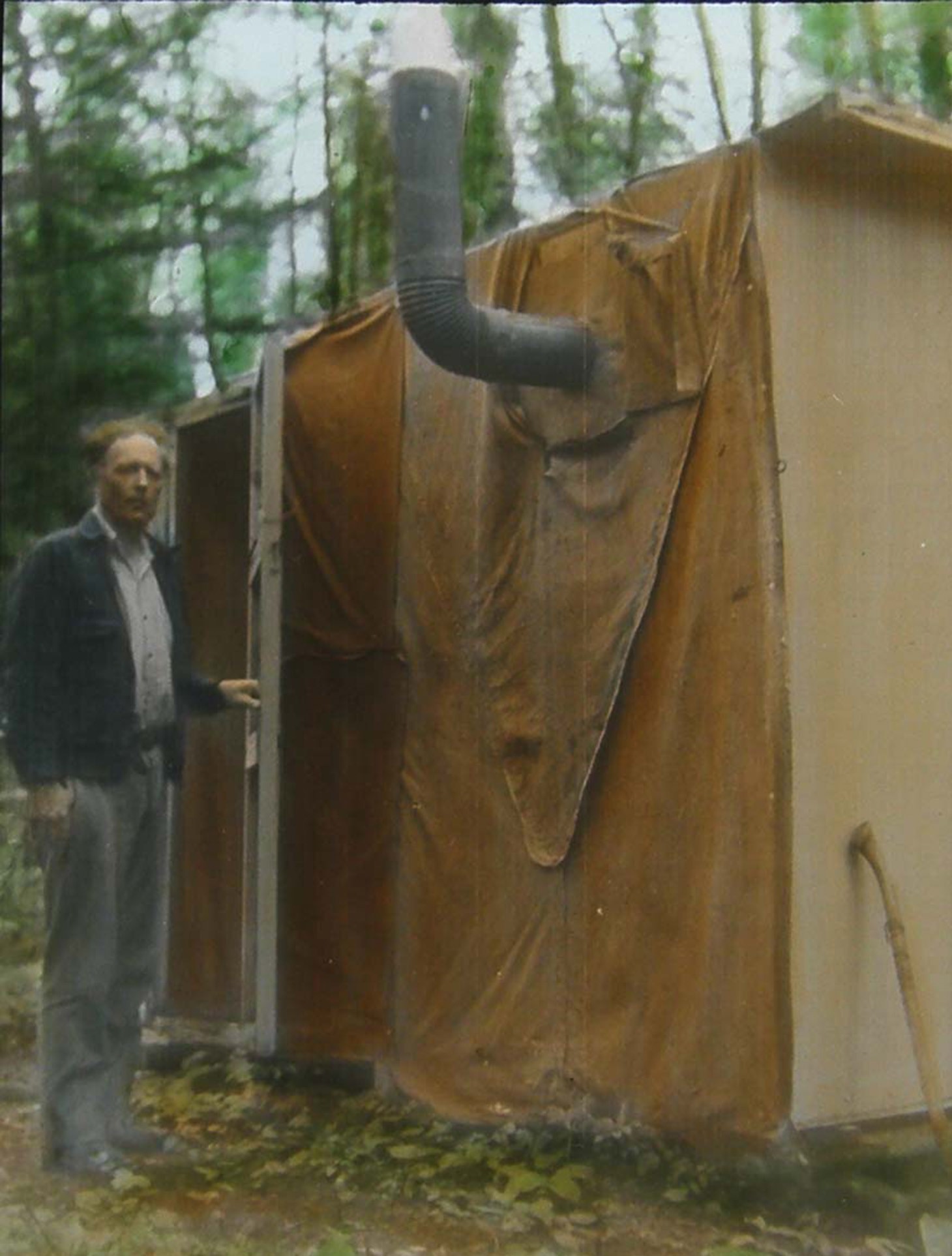
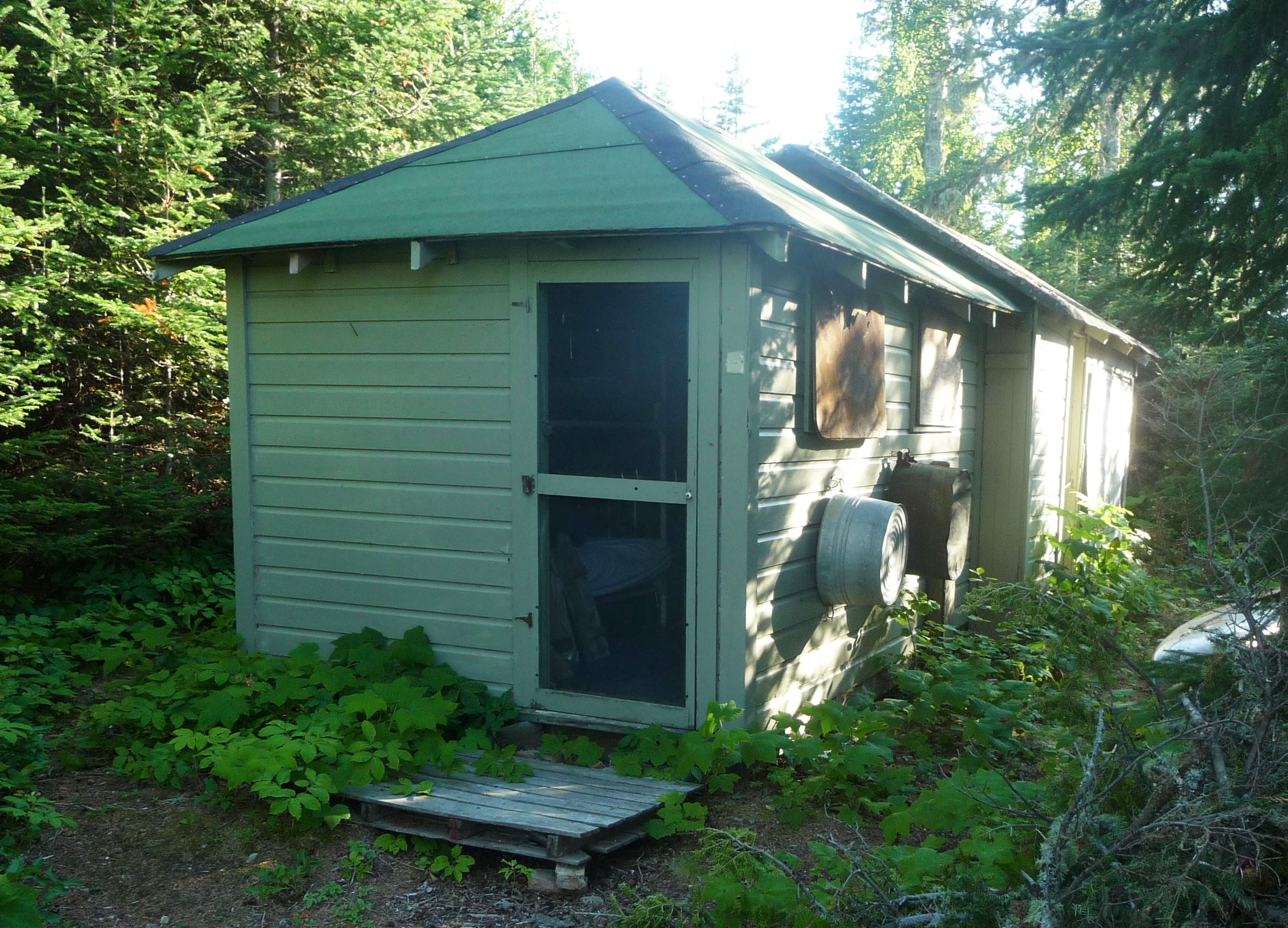
Families (1932-2015)
The Snell Family consists of Roy, Lucille and sons, Jud, John and Laurie, and their children and grandchildren. Jud married Marjorie and they had four children: Teri, Greg, Roy and Cindy. Teri and her husband Bob had three girls: Emily, Jennifer and Molly. Greg married Jan and had two children: Tim and Gina. Deb is his wife now. Roy married Julie and they had four girls: Jessica, Abbie, Anna and Erin. Cindy married Tom and they had three children: Lindsy, John and Tom. She is now married to Scott. Jennifer and her husband Tim come to the island with their two children: Fritz and Bea. John Snell married Jeanne and they had three girls: Susan, Kathy and Nancy. Kathy married D and they had three children, Crystal, Don and Scotta. Crystal married P and they have Noam. Laurie married Joan and they had two children: John and Mary Paige. John married Janet and they had two girls: Molly and Savannah. Snells have been on the island for 83 years.
Personalities
Roy was an adventurer, author and lecturer. He received his theology degree from the Chicago Theological Seminary, his masters at the University of Chicago. He served as a superintendent of a mission in Cape Prince of Wales Alaska in 1910. He served as a missionary in WWI for the YWCA. He returned home and married Lucille in 1919. He wrote his first book Little White Fox in 1916. He wrote most of his life and did lecture series in schools in Detroit and Des Moines for school children. He showed colored slides of his adventures and his experiences on Isle Royale to promote this beautiful place.
Lucile was a concert pianist and attended the New England Conservatory of Music. She taught at several universities until her marriage. She gave music lessons and made doll clothes and taught her three boys piano, cello and violin. She suffered from asthma, which led them to find respite in the north especially in the summers. Before they discovered Isle Royale the Snells spent summers in Hessel Michigan.
Jud was a businessman, John a Navy pilot, concert violinist, salesman, and engineer, and Laurie a mathematics professor at Dartmouth College.
Family histories shared from the Isle Royale Cookbook
Mattson
Inez and Art Mattson were children of early Swede-Finn (Swedish speaking emigrants from Finland) fishing families on Isle Royale. Inez was the oldest daughter of Louis and Selma Mattson who were the original fishing family at what is now the Edisen fishery in Rock Harbor. She spent her early childhood at that site. Art was the oldest son of Louis and Hanna Mattson who were early fishing folks at the ‘Tobin’s Harbor Fishery. Inez came to the Tobin’s Harbor/Mattson Fishery in 1930 to care for Art’s father who had been kicked by a moose. She and Art were married in 1931. They were the last fishing family in Tobin’s Harbor. Inez was an expert at the wood stove, baking both for her family and for some of the other summer residents. She prepared fish and fish parts in every form imaginable. The diet of fish was supplemented with various meats home canned during the winter months. And during the April to November fishing season on the Island, chickens provided fresh meat/eggs and a very large garden produced a crop of fresh vegetables.
Submitted by Peg and Lou Mattson
Dassler
Judge Charles F. W. Dassler and his wife Lee came with their family from Leavenworth, Kansas. He purchased the land from a copper company. The Dassler family built a cottage. A typical frame structure with board and batten siding and simple tilt-out windows, in Tobin’s Harbor. Since steamships brought supplies to the resort, Carl, an amateur photographer, and only son, married Lucy Finlayson. Lucy, “Maw Maw”, would put in an order at the lodge and it arrived on one of the weekly supply boats. In 1908 Judge Dassler and son Carl, nephew Dale, Wilder Lawrence and Rev Connolly took a week long cruise around the entire circumference of Isle Royale. The Winika brothers built Carl Dassler’s graceful black swan the Awanita. The family cabin is now used for the Artist in Residence Program.
Lee Dassler and Isle Royale National Park Archive
McPherren – Orsborn – Captain Kidd Island
Captain Kidd Island has been the McPherren family camp since 1934, a summer home to Wayne, “Mac”, Marjorie, “Marge” and their two daughters, Elinor and Sally. The Schofields originally homesteaded that island along with Belle Isle, and it was Mrs. Schofield who named it. Devotion to Captain Kidd never waned throughout Mac’s long life. During her years there, Marge was known as a great cook on any kind of stove or oven including camp stoves with oven-tops in the 1930’s, wood stoves, then more recently propane stoves and ovens used mostly for baking bread, rolls and Cookies.
Homer “Coach” Orsborn was asked by Mrs. Farmer to develop a recreational program and build a tennis court at Rock Harbor Lodge in 1934. Coach, Elizabeth and their children, Betty, Jim and Jack, initially stayed in the tent community, then camped on Greenstone Island before buying the cabin they called “Driftwood” in Snug Harbor. The recipe for fish chowder came from Mrs. Wirt, another cottager. Elizabeth, nicknamed “Angelique” after Angelique Mott, made her chowder on a kerosene stove and even canned fish so the family could have chowder in the winter. Mouth-watering Isle Royale blueberry pie came out of the little oven that sat on top of the stove. Chowder, berry pie and planked fish delighted family and friends who came for the occasional campfire in the picnic area in front of the Orsborn cabin.
Sally McPherren and Jack Orsborn married in 1954, uniting the two Isle Royale families. They and their children, Mack, Bill, Amy and Ann, continued to go to Captain Kidd whenever they could. Elinor McPherren married Harry ”Bud” Quinn in 1952 and with their children, Pam, Tom and Janet, spent many summers on Captain Kidd with Marge and Mac. Changes have inevitably taken place since the 1930’s. The cabins on Captain Kidd remain but the Orsborn cabin in Snug Harbor and the beach below it were supplanted by the marina. But thanks to succeeding generations, the memories, stories and recipes of Isle Royale old-timers continue to live on.
Submitted by Sally McPherren Orsborn
Connollys
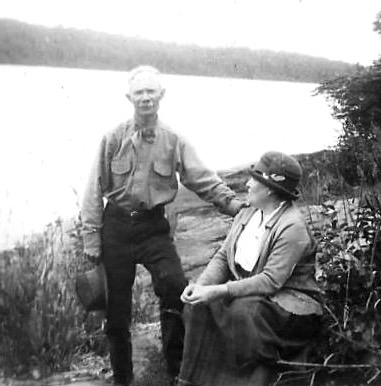
“A few weeks after our arrival in Leavenworth, Kansas in May of 1906 Mrs. Dassler, having been presented, asked me where I planned to spend my vacation. A deacon of the church had vociferated loudly about the charms of Petosky, and most of all the fact that its attractiveness had been proven by over twenty excursion trains of people a day. It seemed to be long on people and short on fish from his story. Then Mrs. Dassler who had a poetic strain in her and no desire to let any fine thing be under-stated began to rave over Isle Royale, as soon as I could wiggle in a question, I asked if the fishing were good? She replied most satisfactorily and that afternoon I visited her and saw some pictures and got some more stories and it was decided.”
Here is how the Connollys got to Isle Royale from my father David Connolly’s recollections about his father Charles Parker Connolly and wife Mary Irwin Wilder. In reading my great-grandmother, Mary Wilder and my grandmother Ellen Wilder Connolly diaries, I see their days at Isle Royale were filled not only with the numerous chores of keeping house-cooking, bringing up water, baking, fire- wood, washing clothes- but of knitting, sewing, writing letters on rainy or inclement days. But on fine days, there was constant movement within the Tobin Harbor community with picnics, visiting each other, playing cards, fishing, going down to the dock when the America comes in. And then since there were three ministers in the harbor – Roy Snell, Dr. Edwards, and my grandfather they held church services, generally, it seems on Scoville Point. That was one of the selling points in a brochure I saw printed by Gus Mattson of the Mattson Resort, that there was “a church service every Sunday”. So maybe they conducted services on Hotel or Minong Island.
Submitted by Ellie Wilder Connolly
Sivertson’s
Stuart Sivertson’s grandfather Severin, “Sam” Sivertson began commercial fishing on Isle Royale in the 1890s. After returning from a trip back home to Norway, he married Theodora Christiansen, who came to this country with her Mother following Sam’s visit. Severin’s brother Andrew also emigrated and fished in the area, as did a brother of Theodora, Chris Christiansen. Sam and Theodora had five children: Myrtle, Arthur, Bertha, Stanley, and Howard. Howard died as an infant at Isle Royale. For decades, Severin Sivertson hauled in catches of lake trout, whitefish and herring from the reefs surrounding Isle Royale, which became a national park in 1940. Several dozen commercial fishermen, some with families lived on the islands of the archipelago in summer, as did vacationers and cottage owners.All four of Sam and Theodora’s surviving children were involved in commercial fishing along with their spouses. Myrtle Sivertson married Milford Johnson Sr, of Two Harbors, and they had six children, Robert, Milford, Norman, Frank, Kenneth, Mary. Arthur married Myrtle Bjorlin and two children were born to this marriage, Howard Sivertson and Elizabeth (Betty) Sivertson Strom. Bertha married Thomas Eckel Sr. of Grand Marais and they had 3 children, Patricia Eckel Nelson, Thomas and Richard Eckel. Stanley married Clara Rasmussen of Grand Marais, and they had three children, Stuart, Sandra (DeBolt), and Sharlene. Sivertson Brothers’ Fisheries, a partnership between Stanley and Arthur was started in 1940, purchasing fish from North Shore Fishermen, and also fishing out of Duluth and Washington Harbor, Isle Royale. It grew steadily through the ’40’s and 50’s, at one point boasting a mail order list of 280,000 customers. With the decline of the lake trout in the mid 1950’s, the smelt fishery and the herring fishery gained prominence, with some catches of millions of pounds of smelt in the 1960’s. The smelt population declined when native predator fish, lake trout, siskiwit and burbot-returned, accompanied by introduced and stocked exotic salmon of several types. Today the business still exists as Sivertson Fisheries, now run by descendants of some of the original fishermen, as does a second business, which spun off, the Grand Portage Isle Royale Transportation Line, Inc, which provides boat service to Isle Royale National Park from Grand Portage, the Voyager II.
Submitted by Nancy and Stuart Sivertson.
Farmer
Westy Farmer once said, “I’ve had the loveliest boyhood any fellow could want”. He was referring to growing up on Isle Royale during the summer and working at his family’s resort, Rock Harbor Lodge, formerly known as Park Place. Westy’s grandfather was “Commodore” Kneut Kneutson who came to the island in 1901 and built some cabins in Snug Harbor. These cabins soon became the resort complex that is now Rock Harbor Lodge and Marina. The resort was owned and managed first, by his grandfather then later his mother, Bertha “Bea” Farmer and her husband Matt. The family eventually lost ownership of the resort to NPS, but continued to manage the property until the late 1940’s.
I will give you some information about Coffee Pot Landing. The first cabin, called the Cook Shack, was built by Westy Farmer in the late 20’s or 30’s. At that time there was an article in a science magazine about how to build ‘this’ cabin for something like $34. I believe the sleeping cabin came first, though as Bylo, “Marit”, would be up there every spring and summer and well into Sept, with 4 little boys. My uncle, Jerry, was just a babe in arms. They were sleeping on a tent platform in a canvas tent, but when Bylo opened the flap one morning to find a moose staring in her face she demanded an actual cabin! It was very unlike Bylo to demand anything. The camp came to be known as Coffee Pot Landing because of the constancy of coffee being on the stove. It was an acknowledgement of Bylo’s hospitality. If anyone ever stopped by…and there were a multitude of visitors, often rounded up by Westy, so he could tell them about Isle Royale, the resort days and about his boat building. Bylo always had coffee and some goodies she made available. Therefore, if one came ashore in front of the cabin, coffee was always ready with hospitality. I think it takes a certain type of person to entertain with such ease! Submitted by Chris Bryan (Farmer)
 IRFFA
IRFFA 